One of the most important engineering entrance tests for admission to NITs, IIITs, and other participating colleges is JEE Main 2027. The National Testing Agency (NTA) administers JEE Main, and the NTA provides all official information about the test, including registration, curriculum, eligibility, admission card, answer key, and results.
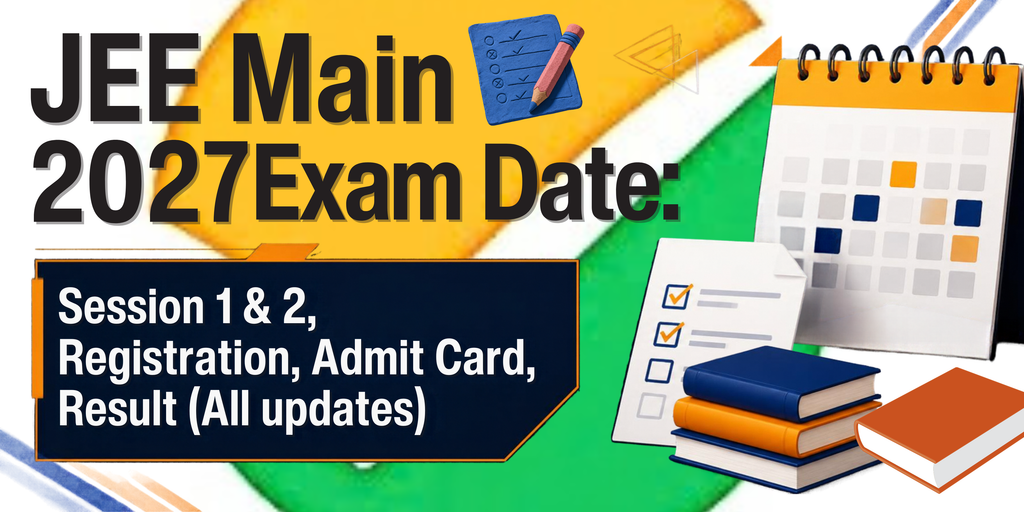
The JEE Main 2027 Exam Date for Session 1 is declared by the NTA.The dates of JEE Main 2027 are January 22, 23, 24, 28, 29, and 30, with January 31, 2027 serving as a buffer day.
If your JEE Main test is just 15 days away, you could be feeling worried. It’s possible that you haven’t finished your syllabus or that you’ve studied everything but are unsure of how to properly revise. The good news is that, if you study wisely rather than just longer, 15 days will be sufficient to greatly raise your score. Nobody can learn the full Jee main exam curriculum in two weeks, let’s face it. However, by concentrating on the appropriate chapters, practicing high-quality questions, and avoiding typical errors, many students have increased their percentile. I’ll outline a practical 15-day plan in this post to help you get the most out of your jee main exam preparation.
Can i Score 98 Percentile in JEE Main in 15 Days
In all honesty, the answer is yes, but only if you already have a solid foundation.
Aiming for the 98 percentile is reasonable if you’ve finished about 75–85% of the course material, have consistently answered questions, and are prepared to study diligently for the next 15 days. However, it is impractical to expect to reach the 98 percentile in just two weeks if you are starting from zero. Unrealistic motivational phrases are not the foundation of this guide. It’s a useful approach that emphasises review, practice jee main exams, questions from prior years, and avoiding typical blunders.
Students frequently dedicate all of their time to learning new subjects. High scorers devote more effort to reviewing their prior knowledge.
Days 1–5: Develop Your Core
During the first five days for jee mains exam :
Revise all important Physics formulas.
Revise all chemistry reaction
Solve chapter-wise PYQs(physics and chemistry)
Attempt one mock test daily and analyze.
Write down every mistake in a notebook(like-concept and formula)
Don’t waste time watching too many strategy videos. and remining time to manage carefully.
Days 6–10: Focus on Speed and Accuracy
At this point, performance takes precedence over learning.
Each day:
One whole mock test.
Examine errors.
Revise the weak chapters again and again.
Spend at least three hours practicing maths.
Revise Organic and Inorganic Chemistry again and again
Your score increases the greatest during this stage.
Days 11–15: Final Revision
The last five days mainly focuses area for jee main exam;
Rapidly Formula revision.
Go through Important reactions.
Previous Year Papers review main point.
Short notes review and revise.
Light practice.
Not start any new chapter during these days.
MATH AREA MAINLY FOCUS NEEDED
1,Identify most repeated and high weightage chapter , 2.if direct formula visible during question-proceed, 3.if no clear in first step in 5 seconds – skip , 4 .Abort if algebra becomes long . Aim ; 10-12 correct question only.
PHYSICS AREA MAINLY FOCUS NEEDED
High ROI; KINEMATICS ,LOM, WEP, Current Electricity ,Capacitors , Modern Physics. Medium ROI; Waves, SHM, Optics, Low ROI; Heavy rotation, advanced magnetism. Rule; Formula recognition in 5 seconds or skip.
One of the most difficult engineering entrance tests in India is JEE Advanced. The prospect of passing JEE Advanced in just ten days may seem unattainable because many students study for it for a year or two. But if you use the last ten days wisely, they can still have a significant impact.
The complete course cannot be learned from scratch in ten days. However, these last few days might help you review key ideas, increase accuracy, minimise errors, and raise your score if you have already studied over your preparation period.
“Complete everything” shouldn’t be the aim for the following ten days. Smart revision, improved problem-solving skills, and exam preparation should be the objectives.
Day-1.Analyze Your Current Preparation(position)
Studying at random without knowing their true situation is the largest mistake that students have done in recent time and day.
Step to analyze preparation:
Which chapters are your strongest?(strong part)
Which chapter have high weightage?(focus this part)
Which concepts and topics are still confusing?(go through and practice it)
Which type of questions are you making mistakes in?(more practice)
Day-(2-5):Smart Revision for JEE Advanced exam
Focus on key formulas, theoretical summary, and problem-solving speed in your final revision. Review mistakes you made in previous practice exams and devote more focus to subjects that have traditionally presented difficulties for you. Prioritizing high-yield chapters and skipping infrequently asked topics are other aspects of smart revision.
Properly Revise formulas and reaction mechanisms regularly for memorize
Solve more and more pyq question and mock tests.
Keep a note down list of frequent mistakes and review it daily.
Summarize recall of all chapters and revise fastly.
Day(5-10):Mock Tests: Your Scoring preparing
The past ten days have been essential to preparing for mock exams. They assist you in improving your time management skills, handling exam pressure, and seeing trends in your performance. For every practice test, replicate actual exam conditions at home.
Attempt at least 3–5 full-length mock tests in remaining days.
After each tests, analyze which topic part consumed too much time taken.
Work on improved speed and accuracy for topics you are already comfortable.
Learn to avoid tough questions initially and return to them if time permits.
(Imp.)What you should not do in the last 10 days
1.Do not start too long many new chapters
Introducing entirely new subjects can be stressful and confusing. You can edit a chapter if it’s brief and you know the fundamentals. However, do not attempt to finish lengthy chapters from scratch.
2.Do not watch full length Lectures
While watching lectures feels helpful, answering questions is more crucial in the last days.Lectures should only be used to address specific questions.
3.Do not compare your with other
Checking what others are doing is a common way for students to waste their last days.Everybody has unique advantages and disadvantages. Concentrate on improving yourself.
4.Do not forget Sleep
A weary brain is more prone to errors.Because JEE Advanced takes concentration for several hours, try to get enough sleep.
Can anyone realy crack jee advanced in 10 days?
The practical response is that it depends on how prepared you are at the moment. Ten concentrated days will greatly enhance your results if you have already studied the course and still need to review it.It is unrealistic to become JEE Advanced ready in ten days if you are beginning from scratch.Even so, you can improve your performance and reinforce key subjects during these ten days.Studying everything is not the focus of the final days. They deal with making good use of what you already know.
General questions: jee advanced last 10 days
Candidates frequently want to know if they can pass JEE Advanced in a month or if it’s possible to pass with just ten days of preparation. Disciplined 10-day regimens frequently produce unexpected gains, though outcomes vary. Some students even enquire how they may pass the JEE Advanced in a week or in a single day. Focus is more important than panic, so make the most of the time you have.
One of the most common education selected by Indian students is engineering. Undergraduate and graduate engineering courses are offered by various variety engineering institutes in India. India’s top engineering universities and institutes attract students from all over the world and generate more engineers yearly than the majority of other countries.
Table of Contents
One of the most popular career options for Indian students is still engineering. In order to gain admission to prestigious engineering colleges, millions of students study for competitive exams like as JEE Main, JEE Advanced, BITSAT, VITEEE, and state-level entrance exams each year. It will come that the need for qualified engineers in domains such as computer science, robotics, cybersecurity, data science, electronics, mechanical engineering, and artificial intelligence would rise dramatically in 2026. As a result, selecting the best engineering college is now more crucial than ever.
Famous Engineering Colleges in India 2026
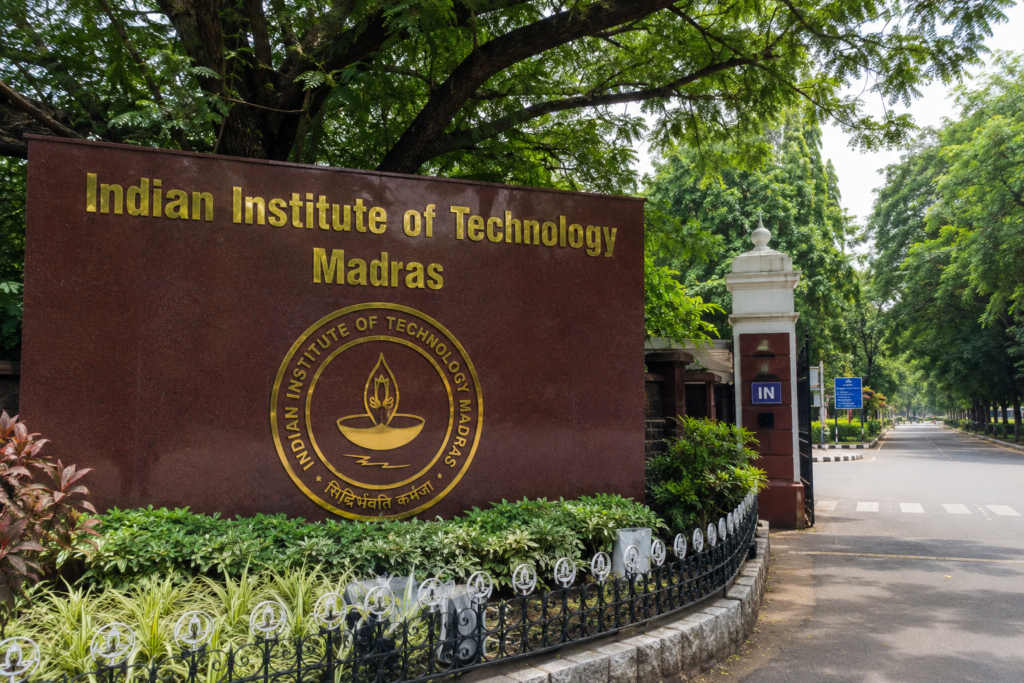
(1),Indian Institute of Technology (IIT) Madras;
Academics-IIT Madras is one of the most important Institutes of National Importance for higher technological education and basic and applied research. It is ranked 1st in India among Research and Teaching Institutions in Engineering by MHRD and also among top 50 in Asia. IIT Madras is a residential Establish with nearly 550 faculty, 9700 students and 1250 administrative & supporting staff in a self-contained campus located in a beautiful wooded land, and has established itself as a premier Institute for teaching and research in the country. B.Tech (Duration – 4 Years)-The Bachelors of Technology program is a highly sought after program that gives students an undergraduate degree in an engineering discipline after four years of study. Admission is through Joint Engineering Entrance (JEE) (Mains) & JEE (Advanced) conducted at different centres all over the country. Admission to the specific branch of study is made by the Joint Admission Committee.
IIT Madras Fees – B.Tech Fee Structure
Tuition costs, one-time fees, semester-by-semester fees, and caution deposits make up the iit Madras pricing structure. For four years, students in the general category must spend a total of INR 9.39 lakhs, including INR 8 lakhs for tuition. See the following table for a thorough breakdown of IIT Madras fees:
Course Name
Duration
Total Tuition Fee (Approx.)
Eligibility Criteria
B.Tech
4 Years
Rs. 8 – 10 Lakhs
10+2 with 75% + JEE Advanced
B.Tech + M.Tech (Dual Degree)
5 Years
Rs. 10 – 12 Lakhs
10+2 with 75% + JEE Advanced
BS + MS (Dual Degree)
5 Years
Rs. 10 – 12 Lakhs
JEE Advanced
M.Tech
2 Years
Rs. 20,000 – 50,000
GATE
MBA
2 Years
Rs. 8 – 10 Lakhs
CAT
M.Sc
2 Years
Rs. 12,000 – 30,000
IIT JAM
Ph.D.
3-6 Years
Rs. 15,000 – 30,000 per year
GATE
M.S(By research)
2-3 Years
Rs. 10,000 – 20,000 per year
GATE
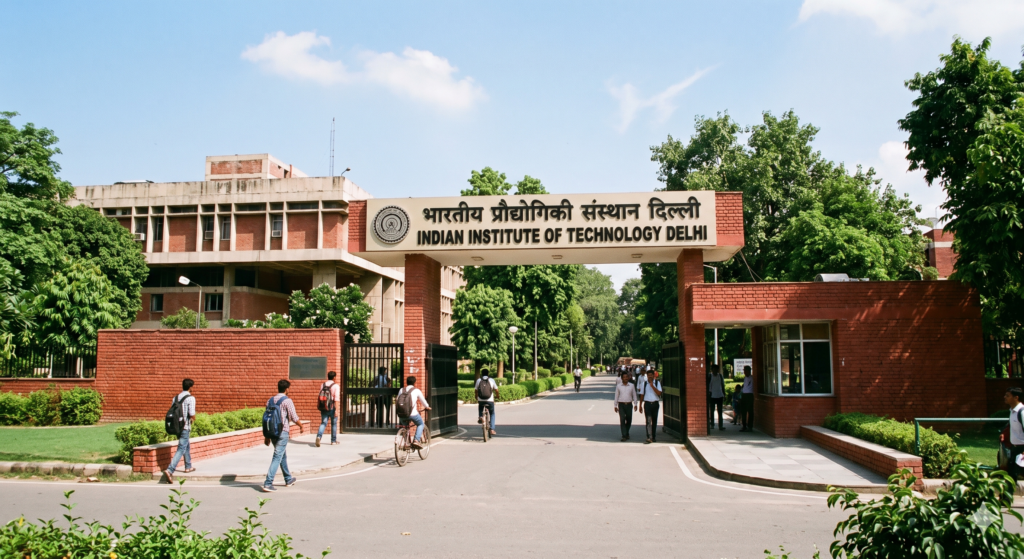
(2).Indian Institute of Technology (IIT) Delhi
IIT Delhi is a center for creativity and innovation as well as education. Students are empowered to go beyond established limits and create answers to real-world problems by the institute’s strong emphasis on interdisciplinary research and entrepreneurship. IIT Delhi continues to influence the direction of technology and education in India and around the world thanks to its long history of producing academicians, industry leaders, and innovators. B.Tech (Duration – 4 Years)-IIT Delhi’s B.Tech programs are well known for their emphasis on cutting-edge research, academic rigour, and creativity. These programs provide a broad range of areas of study, ranging from established disciplines like Civil, Mechanical, and Electrical Engineering to modern subjects like Computer Science, Biotechnology, and Artificial Intelligence. They are designed to give students a solid foundation in engineering and technology. Through cutting-edge labs, internships, and industry partnerships, the program combines theoretical understanding with real-world application. In addition to a thriving campus community and a plethora of chances for interdisciplinary learning, entrepreneurship, and international exposure, IIT Delhi’s B.Tech programs equip students to become leaders in their areas.
IIT Delhi Fees – B.Tech Fee Structure
Category
Tuition Fee (₹)
Other Charges (₹
Hostel Seat Rent & Amenities (₹)
Total Per Semester (₹)
Gen/OBC-NCL/EWS (Income > ₹5 Lakh)
1,00,000
14,400
8,600
1,23,000
Gen/OBC-NCL/EWS (Income between ₹1–5 Lakh)
33,000
14,400
8,600
56,300
Gen/OBC-NCL/EWS (Income < ₹1 Lakh)
0
14,400
8,600
23,000
SC / ST / PwD
0
14,400
8,600
23,000
(2).Indian Institute of Technology (IIT)Bombay
Through excellence in academic scholarship and the complete campus experience, IIT Bombay offers education for a lifetime. High-quality instruction is provided by distinguished academics with well-known mentors, and students’ development is greatly aided by a strong alumni network. While hostels offer modern amenities, SINE encourages entrepreneurship by fostering independent thought. Campus healthcare, cafeterias, and e-buggies are among the options. The lush campus, which is tucked away in the tranquil Powai neighbourhood, provides a welcome diversion from Mumbai’s sprawling metropolis. Life at IITB is genuinely unforgettable because to the exciting extracurricular activities and India’s well-known Mood Indigo festival. B.Tech (Duration – 4 Years)-A prestigious four-year, eight-semester undergraduate degree is offered by the IIT Bombay B.Tech program. It is essential necessary to pass the JEE Advanced exam in order to be admitted. The total cost can vary from ₹8.00 lakhs to ₹12.00 lakhs based on the student category and discipline selected.
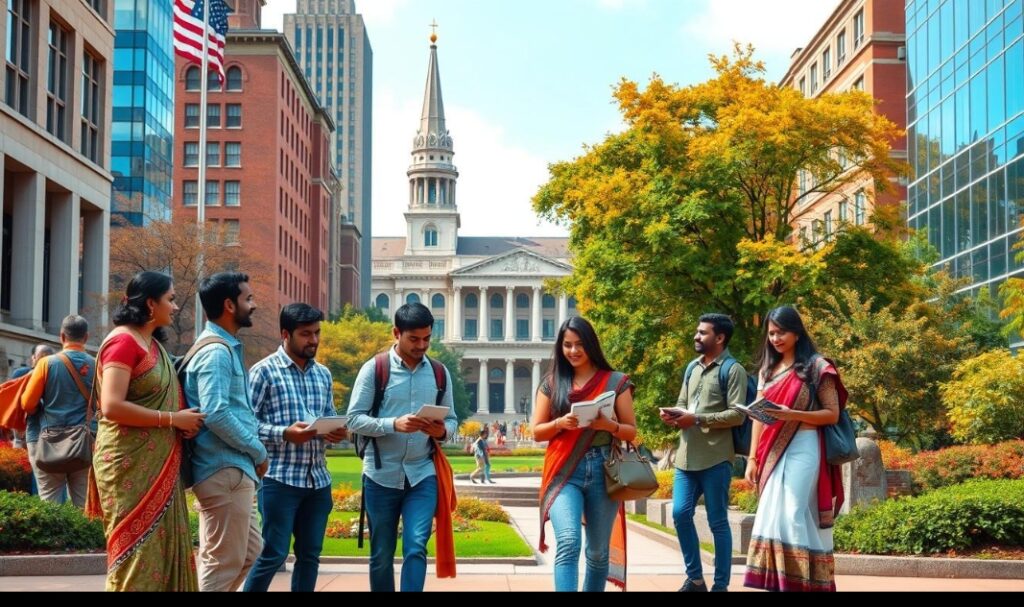
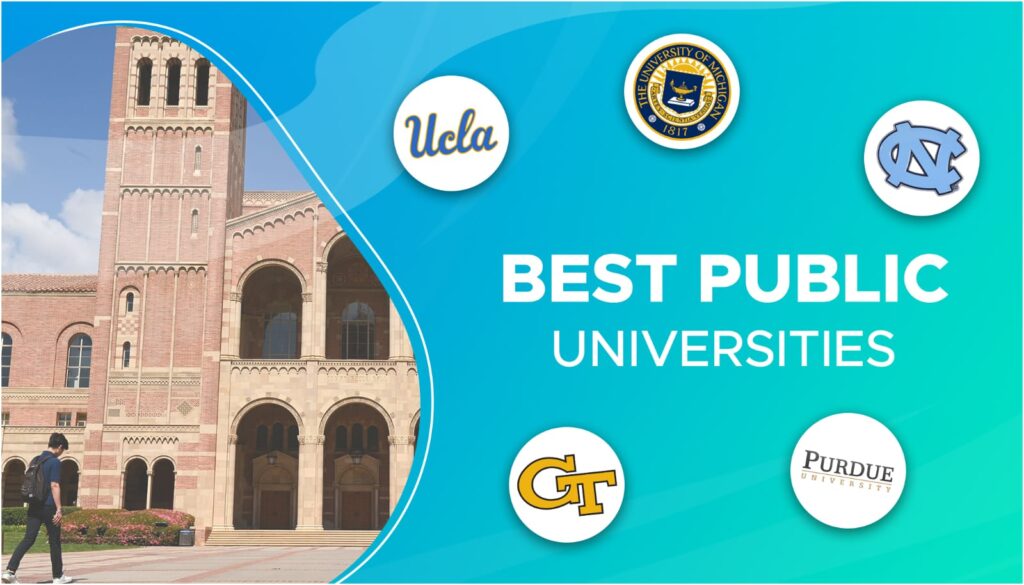
World-famous research institutions like the University of California (UC) system, the University of Michigan, and the University of Virginia belong to the best public universities in the US that often provide Ivy League-level academics at a fraction of tuition costs.all are the highest-ranked best public universities in the 2026 Best Colleges rankings,below listed according to their ranking category.
Table of Contents
Best public Universities in USA for 2026
These universities are popular across the world for their outstanding undergraduate and graduate programs, famous faculty, and research output:
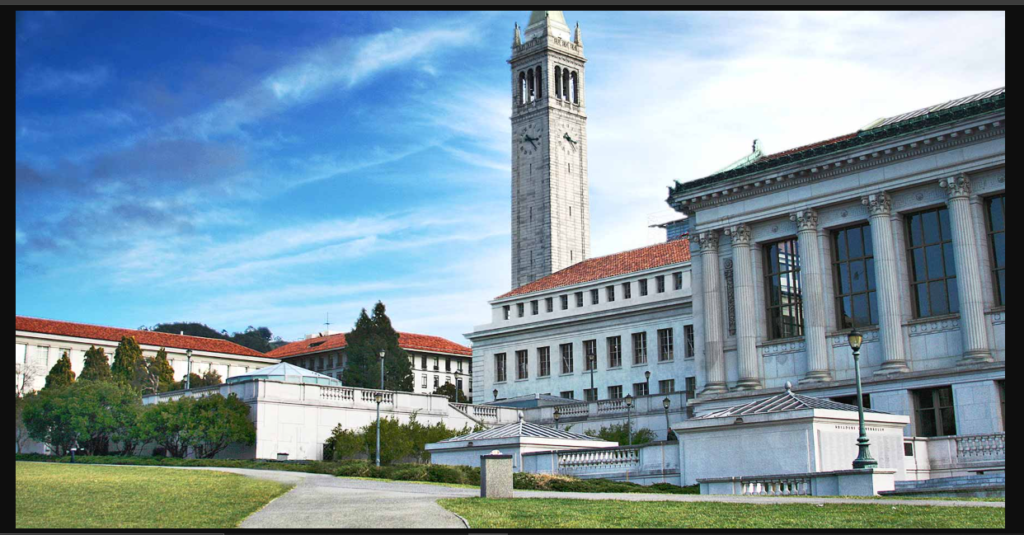
(1).University of California – Berkeley:
The University of California, Berkeley(1868) is a public university. The University of California, Berkeley is placed #15 across National Universities in the 2026 edition of Best public universities. Additionally, it is ranked #1 among Top Public Schools. UC Berkeley has expanded from 10 faculty members, 40 students, and three fields of study to over 1,500 academics, 45,000 students, and more than 300 degree programs.
(2).University of California, Los Angeles (UCLA):
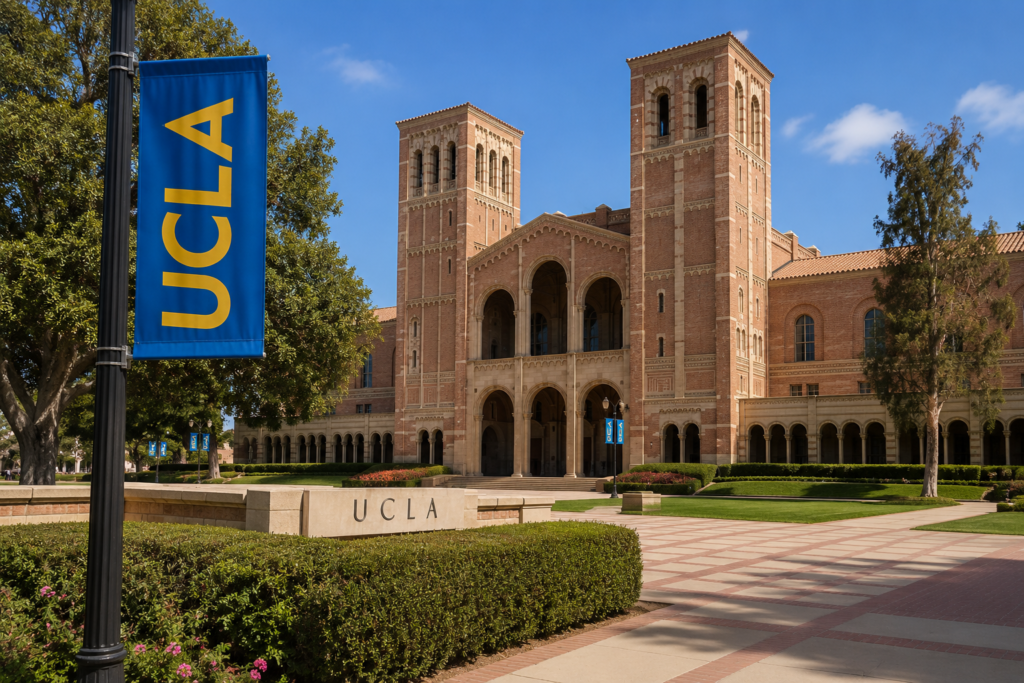
The University of California, Los Angeles(1919) is a public university. The University of California, Los Angeles is placed #17 among National Universities in the 2026 edition of Best public universities. Additionally, it is ranked #2 among the best public schools. Renowned graduate programs including the Anderson School of Management, the School of Law, and the David Geffen School of Medicine are separated from the UCLA College, which covers the Humanities, Social Sciences, Physical Sciences, and Life Sciences.
(3).University of Michigan–Ann Arbor:
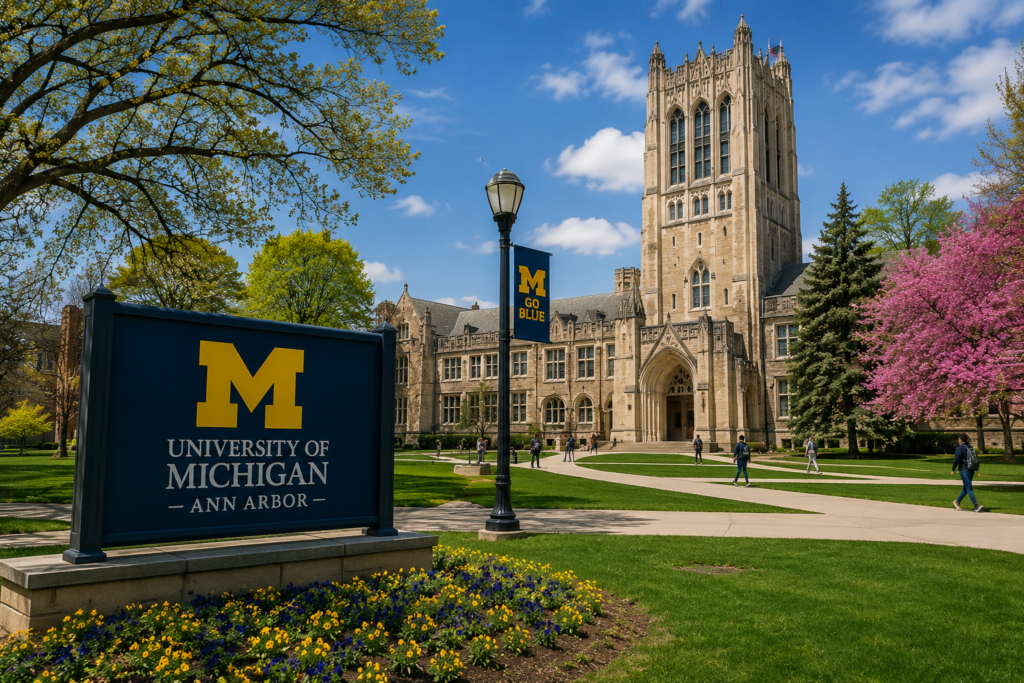
The University of Michigan—Ann Arbor(1817) is a public university. The University of Michigan—Ann Arbor is placed No. 20 among National Universities in the 2026 edition of Best Colleges. Additionally, it is ranked #3 among the best public schools. Michigan’s exciting academic community delivers brilliance worldwide and in a variety of fields. Because of the exceptional quality of our 19 schools and colleges, internationally renowned staff, and departments with 250 degree programs, we are recognised as a leader in higher education.
(4).University of Virginia (UVA):
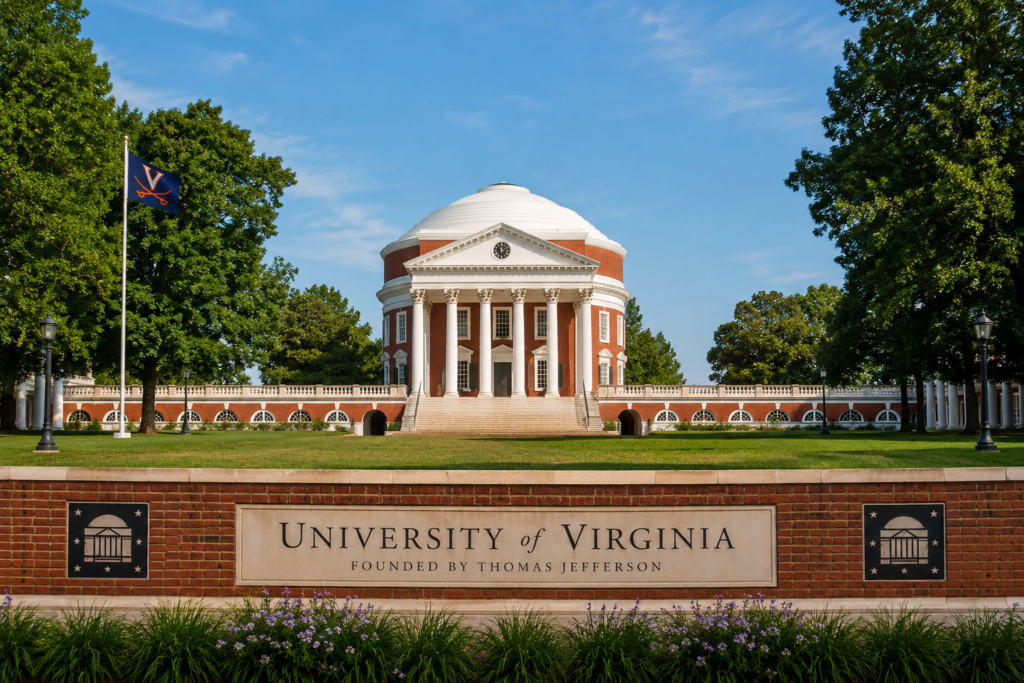
The University of Virginia(1819) is a public university. The University of Virginia is ranked #26 among National Universities in the 2026 edition of Best Colleges. Additionally, it is ranked #4 among the best public schools. UVA, a prestigious “Public Ivy” with top-ranked business and liberal arts programs, is located in Charlottesville and provides a traditional college experience.
(5).University of North Carolina at Chapel Hill (UNC):
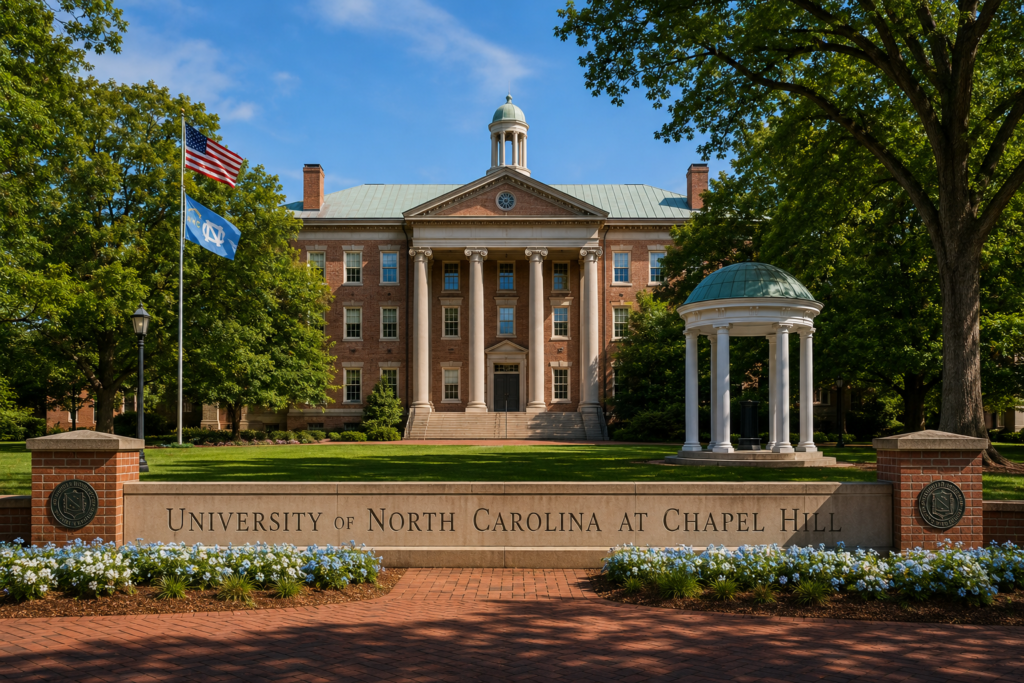
The University of North Carolina—Chapel Hill(1789) is a public university. The University of North Carolina—Chapel Hill is placed No. 26 among National Universities in the 2026 edition of Best Colleges. Additionally, it is ranked #5 among the best public schools. By offering support, cultural diversity, awareness, and a sense of community among its members, the institute’s Gillings International Graduate Student Association works to improve the health and wellbeing of international students. If an overseas student’s home university has a collaboration agreement with UNC-Chapel Hill, the institution provides a variety of student exchange programs. The average GPA at the school is 3.5 out of 4.0, and its the admission rate is 19%. The institute has about 10,984 graduate students and 19,117 undergraduate students.
#Annual fee Study in Top Public Universities in USA
For international students, joining public colleges can still be an option because studying in the USA is not affordable. Applicants will notice a significant difference if they compare the costs of public and private institutions in the United States;
In 2025, the average tuition fee at public four-year colleges was USD 31,880 for international students.
On the other hand, the average tuition fee of studying at private universities in USA was USD 45,350 for international students.
For overseas students, the expense of studying public universities has increased year over year. Analysing the price from the prior year is important for comprehending the percentage rise. This is a comparison of the annual fees for overseas students attending public colleges in the United States:
The Railway Recruitment Board (RRB) recently released the RRB NTPC Under-Graduate (CEN 07/2025) CBT-1 exam schedule on May 7–9 and June 13–21, 2026, at approx 200 centres for 3,058 vacancies. The exam is held in three shifts every day. City Intimation Slips are released 10 days before the exam and admit cards are released 4 days before the exam date of a particular candidate.
Exam Phase 2: 13th, 14th, 16th, 17th, 18th, 19th, 20th, and 21st June 2026
Exam Phase 1: 7th, 8th, 9th May 2026
Exam Shifts: Three shifts (morning-9:00 AM,afternoon-12:45 PM,evening-4:30 PM)
RRB NTPC Under-Graduate (UG) Exam Dates 2026
RRB NTPC undergraduate city intimation slip and admit card release dates 2026
Due to the large number of candidates, the RRB NTPC Undergraduate Exam 2026 will be conducted in multiple phases across May and June. Refers to below table to check the exact dates for downloading the exam hall ticket.
NTPC UG Exam Date2026
City Intimation Slip Date
Admit Card Date
7th May 2026
27th April 2026
3rd May 2026
8th May 2026
28th April 2026
4th May 2026
9th May 2026
29th April 2026
5th May 2026
13th June 2026
3th June 2026
9th June 2026
14th June 2026
4th June 2026
10th June 2026
16th June 2026
6th June 2026
12th June 2026
17th June 2026
7th June 2026
13th June 2026
18th June 2026
8th June 2026
14th June 2026
19th June 2026
9th June 2026
15th June 2026
20th June 2026
10th June 2026
16th June 2026
21th June 2026
11th June 2026
17th June 2026
All details below on the RRB NTPC UG Hall Ticket 2026
Candidates must examine a few crucial details on the Railway NTPC UG Admit Card after downloading it. The candidate will not be permitted to take the exam if there is any discrepancy.
West Bengal – Kolkata, Durgapur, Siliguri, Asansol
Uttarakhand – Dehradun, Haldwani, Roorkee
Last month Preparation Tips for RRB NTPC Undergraduate Exam 2026(under my experience)
Candidates who plan to take the RRB NTPC UG Level Exam 2026, which is scheduled for June 13, 2026, can review or follow to the preparation advice provided below:
First Understand the exam pattern and RRB NTPC syllabus review before going the examination.
Please revise your complete own handwritten notes.
Solve previous year question papers to understand past years trends.
Create short notes from complete handwriting notes for only quickly revision purpose.
Practice Mathematics and reasoning regularly to improve your speed and accuracy.
Take mock tests (2-3) times a week and analyze performance.
And most importantly,keep your sleep cycle and health balanced.
RRB NTPC CBT 1 Undergraduate Exam Pattern 2026
A computer-based test (CBT) is used in the online Railway NTPC recruitment the process. Mathematics, general awareness, and general intelligence and reasoning make up the NTPC CBT 1 Exam, which has 100 questions for 100 marks. The RRB NTPC paper pattern for CBT 1 is provided here.
SSC CHSL(Staff Selection Commission-Combined higher secondary level)is a central competitive examination in India that candidates are chosen for a various Group B and group C positions in central government ministries, departments, and attached/subordinate offices.Candidates who have completed their higher secondary education (10+2) are targeted. Candidates for different jobs in the exam have to successfully complete different stages. The commission’s notice goes into full detail about the Combined Higher Secondary Level Examination’s syllabus and exam pattern.
According to the ssc chsl exam 2025 pattern, candidates should be made aware of each selection process’s SSC CHSL Exam Pattern. There are two levels to the SSC CHSL exam, and each level tests different skills.
Tier I focuses subjects of English Language, General Intelligence, Quantitative Aptitude and General Awareness.
Tier II, the exam is divided into three sections. Section 1 Mathematical Ability and Reasoning, while Section 2 focuses on English Language & Comprehension along with General Awareness. Finally, Section 3 focus on the candidate’s Computer Proficiency. Each section is designed to assess the candidate’s overall aptitude for clerical and data entry roles.
SSC CHSL Cut Off 2026
The SSC CHSL tier 1 cutoff has been made available on the official website by the Staff Selection Commission. The cutoff scores are available here for applicants who got the examination. Each post and category has its own SSC CHSL cutoff. Candidates are deemed qualified if their score is at least as high as the cutoff. For further information, see the table that is provided below.
Category
LDC/JSA/Clerk-Cum-Typist
DEO (Science Stream)
DEO (Other Stream)
UR
144.25
169.54
165.26
OBC
143.83
169.49
165.26
EWS
141.42
163.76
163.76
SC
125.40
157.72
158.63
ST
115.25
152.78
150.43
Ssc chsl post
The Exam is conducted to recruit who have passed the 12th grade for jobs in different departments of the central government.the lists is given below of different department;
Lower Division Clerk (LDC)
Junior Secretariat Assistant (JSA)
Data Entry Operator (DEO),(Level-5)
Data Entry Operator, Grade-A(Level-4)
Postal Assistant.
Ssc chsl post preference
Choosing the right post preferences is essential for selecting the right career.The ssc gives everyone opportunities, provided that post preferences are filled out correctly.When filling out the post preference form, applicants should remember to think about factors like the job duties, chances of getting a promotion, location, and personal interests.
There are SSC CHSL jobs in many different departments of the Central Government. The list of SSC CHSL departments below shows the department that typically posts open positions for ssc positions.
Departments Name
Under department operate
1.Central Bureau of Investigation
Ministry of Personnel, Public Grievances and Pensions.
2.Controller General of Defence Accounts
Controller General of Defence Accounts
3.Customs, Excise & Service Tax Appellate Tribunal
Department of Revenue
4.Bureau of Police Research & Development
(Ministry of Home Affairs)
5.Canteen Stores Department
(Ministry of Defence)
6.Central Administrative Tribunal
Central Administrative Tribunal
7.Central Passport Office
(Ministry of External Affairs)
8.Department of Fisheries
(Ministry of Husbandry and Dairying )
9.Department of Commerce
(Ministry of Commerce & Industry)
10.Department of Science & Technology
Ministry of Science and Technology
All these details above are about Central Government Jobs and under which they operate.The job allows candidates serve their country while still having a good work-life balance. People who want to work in the public sector should choose their preferred departments based on their career goals, where they want to live, and their skills. Each job offers a different chance for growth and professional development.
One of the largest and most well-liked government job exams in india is the ssc exam.Millon of applicants take the ssc exam each year in an attempt to acquire respected,long term positions in central government agencies.it is crucial to fully understand the ssc exam if you want to work for the government after completing your 10th,12th or graduation.Everthing you need to known about the exam explained in an easy-to-understand way in this post.
WHAT IS SSC EXAM?
The Staff Selection Commission(SSC) Administers the SSC exam to find applicants for a variety of positions in the indian government’s ministries,departments,and agencies.selecting qualified applicants for clerical, technical,and non-technical government positions is the primary goal of the ssc exam.candidates can obtain positions as a clerk,auditor,inspector,assistant section officer,police man,junior engineer,and many more by passing the SSC exam.
You can apply for the following exams:
SSC CGL-Combined Graduate Level
SSC GD-Constable,General Duty
SSC CHSL-Combined Higher Secondary Level
SSC JE-Junior Engineer
SSC CPO-Central police Organisation
SSC MTS-Multitasking Staff
SSC Stenographer’C’and ‘D’
SSC JHT-Junior Hindi Translator
SSC Exam Full Form-Staff Selection Commission
History-The Government of india regulates the Staff Selection Commission,Which was founded by 1975.It is in charge of hiring employees and administering exams for different central government agencies.
Types of Exams
The staff selection commission administers a number of tests according to work role and educational background.Below is an explaination of some of the main SSC exams.
(1).SSC CGL(Combined Graduated Level)-SSC CGL is open to candidates at the graduate level.It offers to positions like Income Tax inspector,Auditor,Assistant section officer,and examiner and is one of the most popular ssc exam.
(2).SSC CHSL(Combined Higher Secondary Level)-Candidates who have completed the 12th grade are eligible for SSC CHSL.Candidates are hired using this exam for positions like Data Entry Operator(DEO),Junior secretariat(JSA),and Lower Division Clerk(LDC).
(3).SSC MTS(Multi-tasking staff)-Candidates who have completed the 10th grade are eligible to take the SSC MTS.it covers general duty Jobs in government officers as well as non-technical roles like peon and assistant.
(4).SSC GD constable-Constable recruitment for forces such as BSF,CRPF,CISF,ITBP,and SSB is done through SSC GD.This exam consists of both a written and a physical assessment.
(5).SSC JE(Junior Engineer)-SSC JE is intended for people with engineering degrees or diploma.It hires young engineer for the government’s mechanical,electrical,and civil divisions.
(6).SSC Stenographer-Candidates who are proficient in typing and shorthand are required to take the SSC Stenographer exam.For Grade C and Grade D positions,it hires stenographers.
Eligibility Criteria
The Primary SSC qualifying requirements for exams include citizenship,age restriction and educational background.The majority of SSC Exam have an age limit of 18 to 32 years old.
Educational Qualifiacation
SSC MTS; 10TH PASS
SSC CHSL:12TH PASS
SSC CGL:Graduation
SSC JE:Engineering diploma and degrees
SSC Exam Selection Process
The selection process of the ssc exam given below following stages:
Tier-1(Computer based test):Objective types questions
Tier-2 Advanced subject-based examination
Skill Test/Physical Test:Required for certain posts
Document Verification:Final stage before appointment
The exact process may vary depending on the exam natures.
Syllabus for the Exam
The following sections are included in the ssc exam syllabus,which is nearly identical to most exams:
General Intelligence and Reasoning
Analogy
Coding-Decoding
Series
Puzzles
Logical Reasoning
Quantitative Aptitude
Percentage
Ratio and Proportion
Profit and Loss
Time and work
Algebra and Geometry
English Language
Grammmer
Vocabulary
Reading Comprehension
Sentence Correction
General Awareness
History
Geography
Polity
Economics
Current Affair
Pay After passing the Exam
The 7th Pay Commission determines the wage after Passing the Exam.
(1).SSC CHSL:Between 19,900 to 63,200 a month (2).SSC CGL:Between 25,500 and 1,42,400 a month (3).SSC MTS:Between 18,000 to 56,900 a month
Employees receive benefits like DA,HRA,and TA in addition to their base pay,which raises their total in-hand wage.
Advantages of the exam
There are numerous advantages to Passing the exam
(1).Central government employment (2).Security of employment (3).Good Pay and benefits (4).Balance between work and life (5).Advancement and Professional development (6).Respect in the Community
CONCLUSION
For those looking for a safe and lucrative government position in india,this exam is a great possibility.It is entirely possible to pass the exam with the correct approach,commitment,and consistent Practice.To succeed,begin preparing early and maintain consistency.